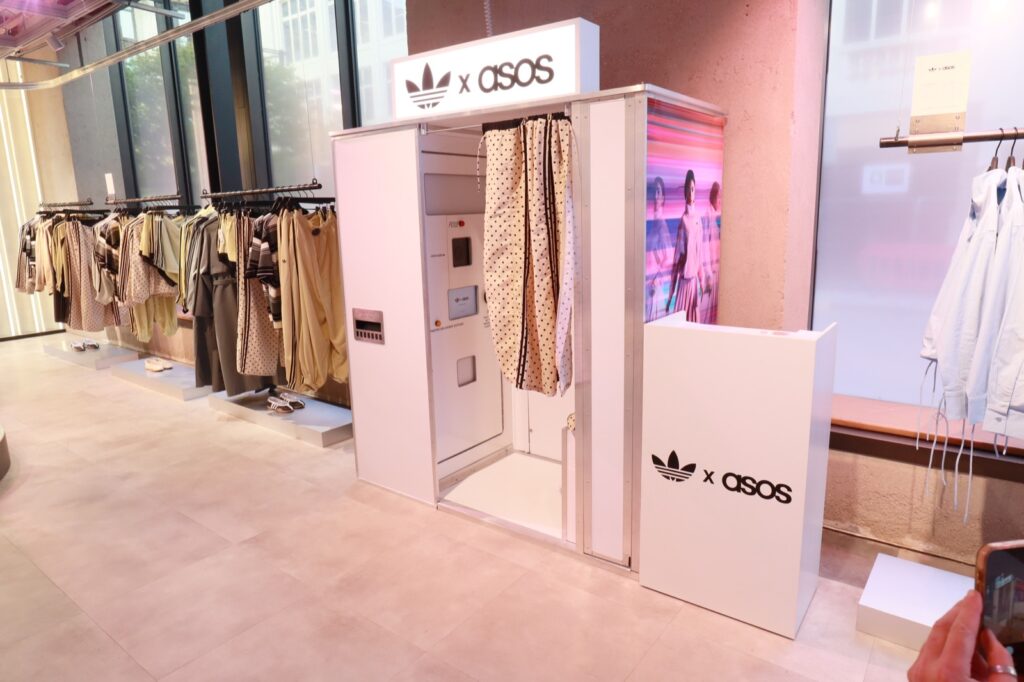
A render makes an idea tangible. It lets a brand or agency picture how an installation could sit within a store, how the branding might appear and what a guest will encounter. But a convincing image is only one part of the job.
Design for the space around it
The footprint needs to make sense within the retail environment. Where will someone pause? Where does a queue form? Can guests understand the experience before stepping inside? Those questions help determine the booth format and placement, alongside the site’s access and operating requirements.
Connect the outside to the experience inside
The installation should feel like one idea, from the exterior branding to the instructions on screen and the content someone takes away. For our adidas x ASOS activation, the enclosed booth and branded lenticular output formed part of that whole experience.
A render is also a working tool for discussing options. Colours, finishes and details can evolve as a concept becomes a deliverable installation. Showing the concept beside the finished work makes that development visible.
Build the flow behind the image
We recommend the output and flow, then programme the experience in our software. That means thinking through each step: the invitation to begin, the instructions, the capture and the delivery of the result. Any registration or survey steps need a clear place in that flow too.
Plan for the days it is running
The finished installation also needs an operating plan. We work through delivery, branding and on-site operation, with staff where the brief requires them. Reporting then brings together the data captured during the activation.
That is the useful story behind render to reality: an idea developed into something people can actually use.